Novosafe
A B2B security platform helping multi-location businesses arm, monitor, and manage their sites from one app.
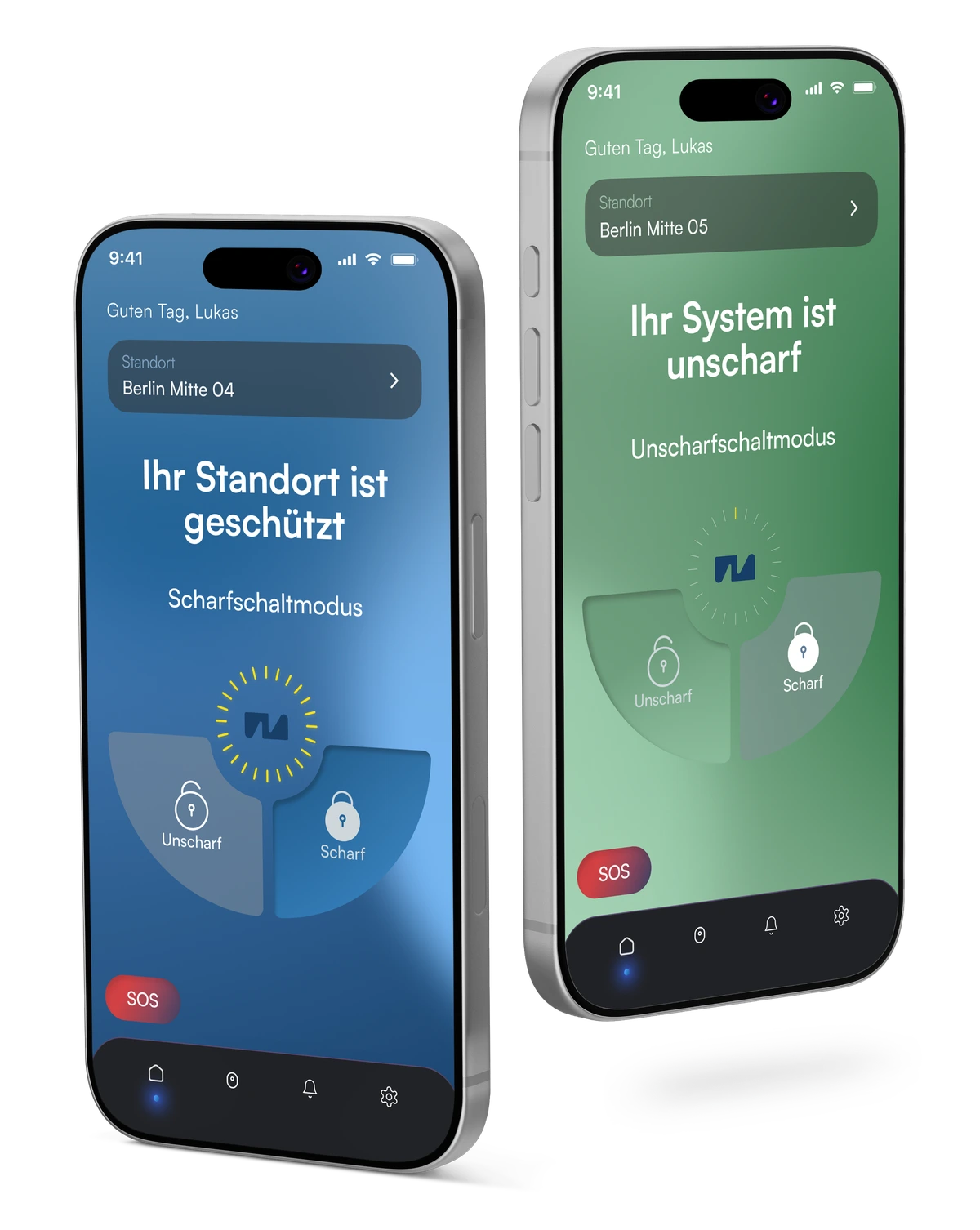
Novosafe launched with a consumer-first MVP: I designed the company's first website in Framer and the app's MVP for individual homeowners. After the company pivoted to B2B, that single-location experience no longer fit: chain retailers and energy-facility operators needed to manage dozens of sites, not one.
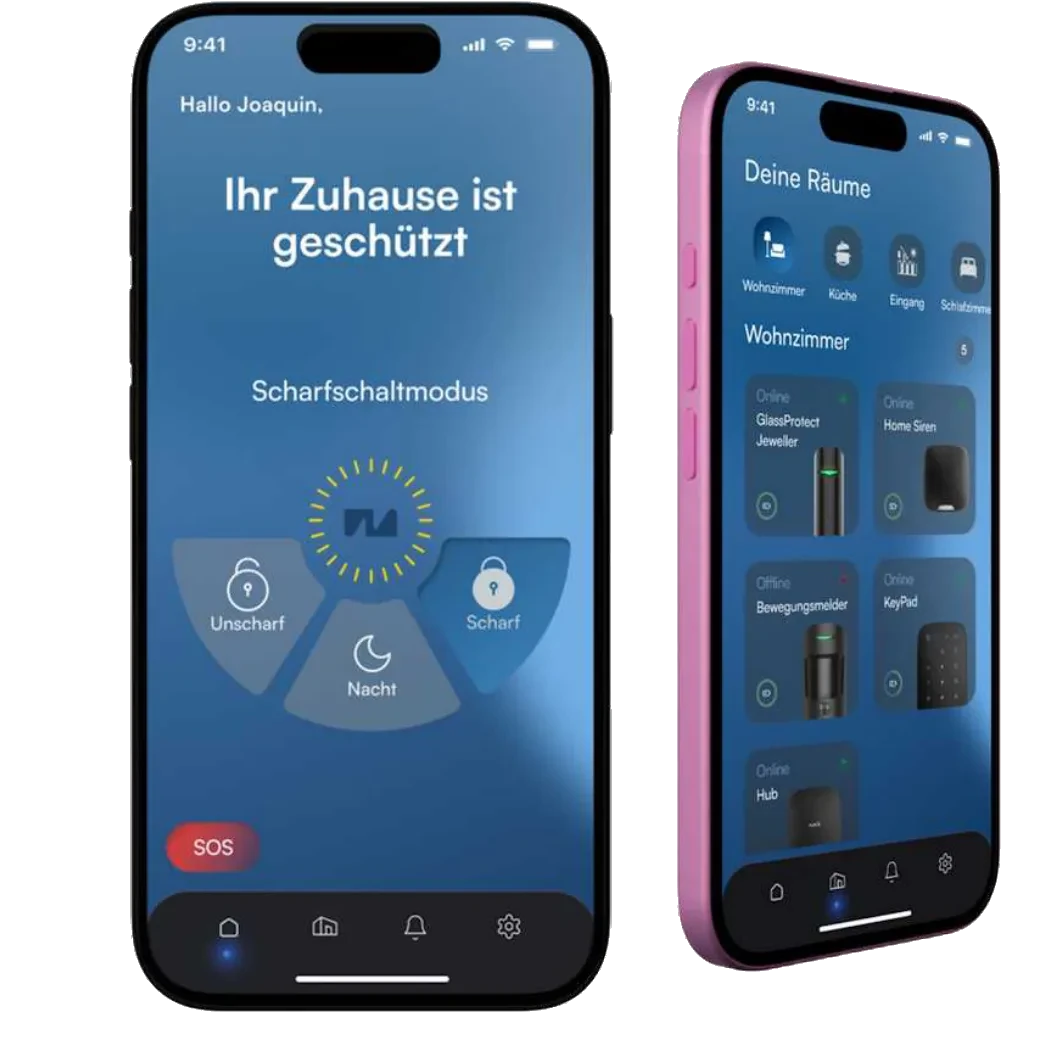
The redesigned app is now focused on the on-site operator, the person managing day-to-day security at a single location, with a clear arm/disarm status control and an SOS action front and center. I explored several directions (Version A/B/C) before converging on reusable components (nav bar, widget containers, device and room cards) built to extend across future device types. Multi-site management for chain retailers and energy-facility operators will live in a separate web app.
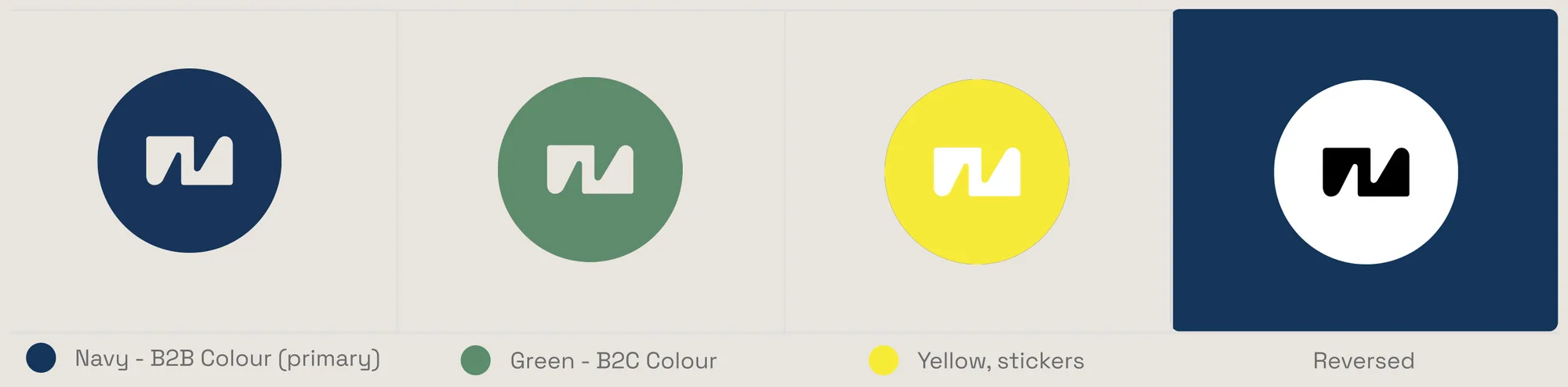
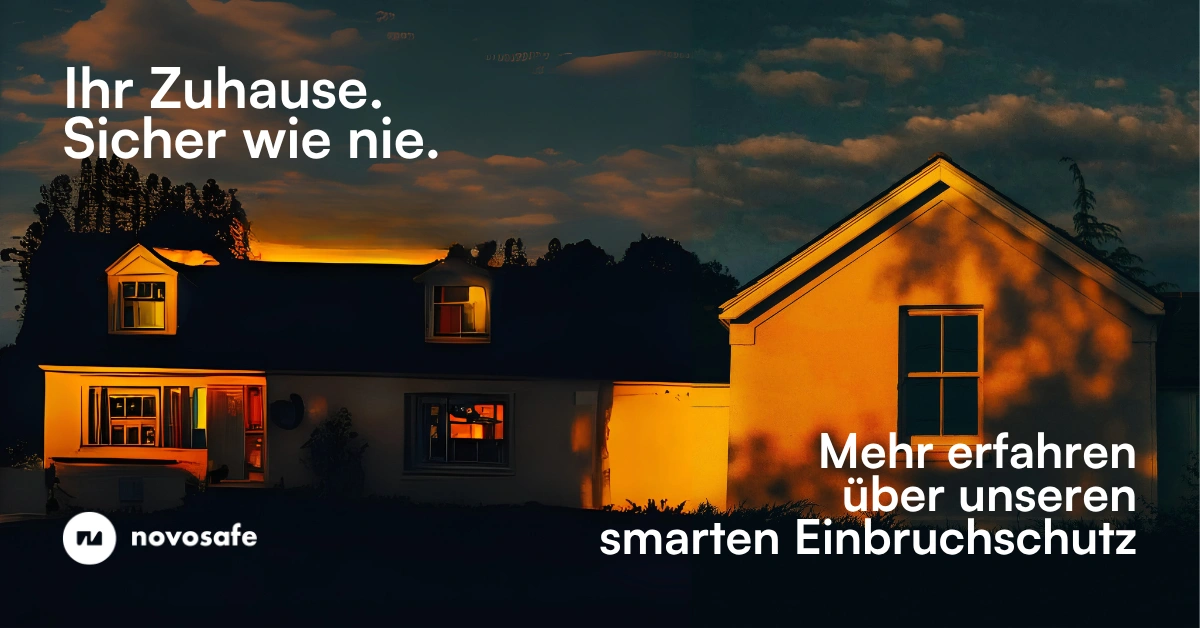
Before the product had a single screen, I designed novosafe's logo from zero: a monogram built from two angled strokes that read at once as the initial and an upward, protective arc. Alongside it I set the colour palette and launch collateral that carried the brand across the website, the app, and print. Navy reads as the more technical, professional side, so it carries the B2B identity. Green reads warmer and closer to home, so it carries the B2C one.
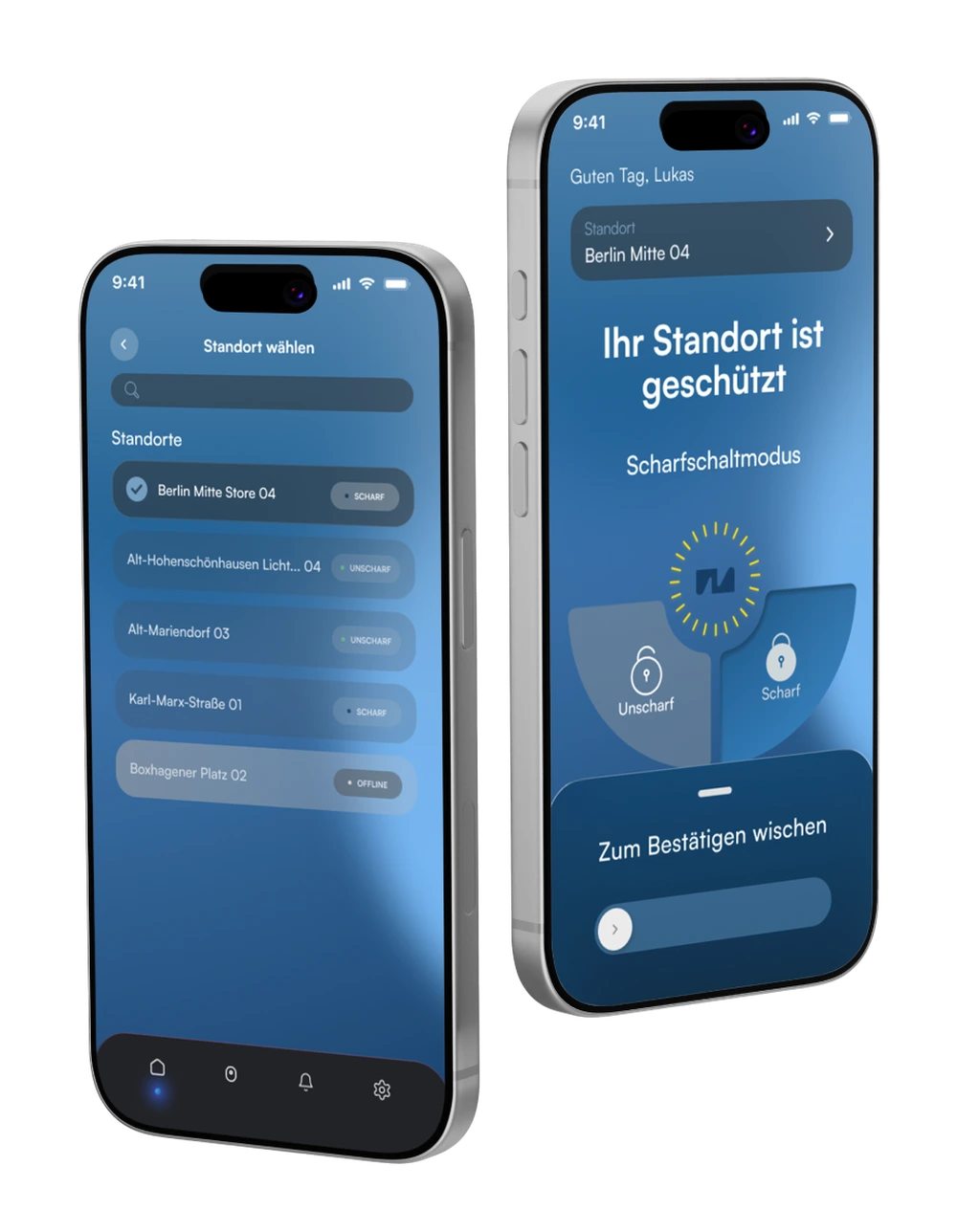
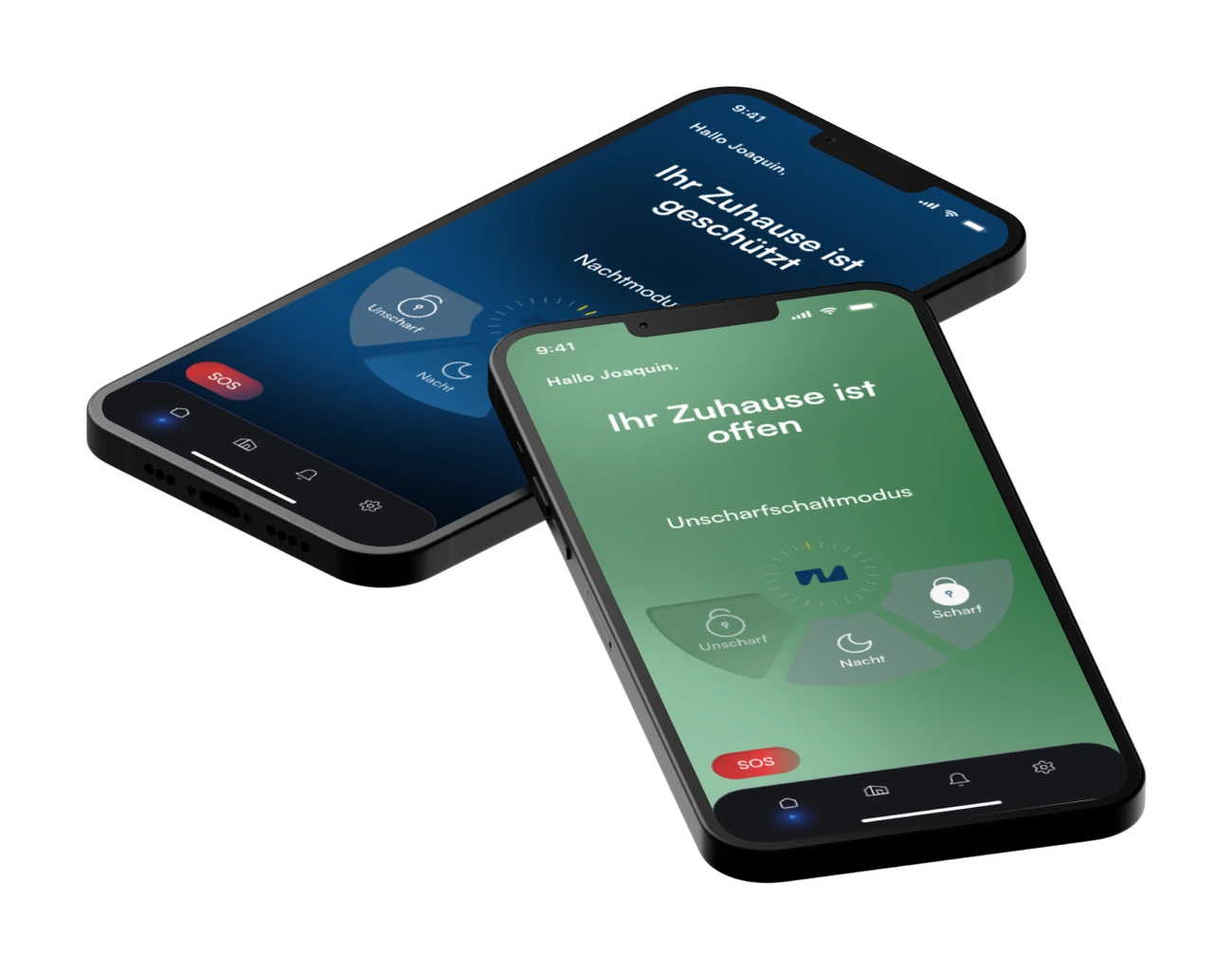
Before the B2B pivot, I designed the MVP for individual homeowners: device monitoring with live status, and on-demand snapshots from any connected sensor or camera.
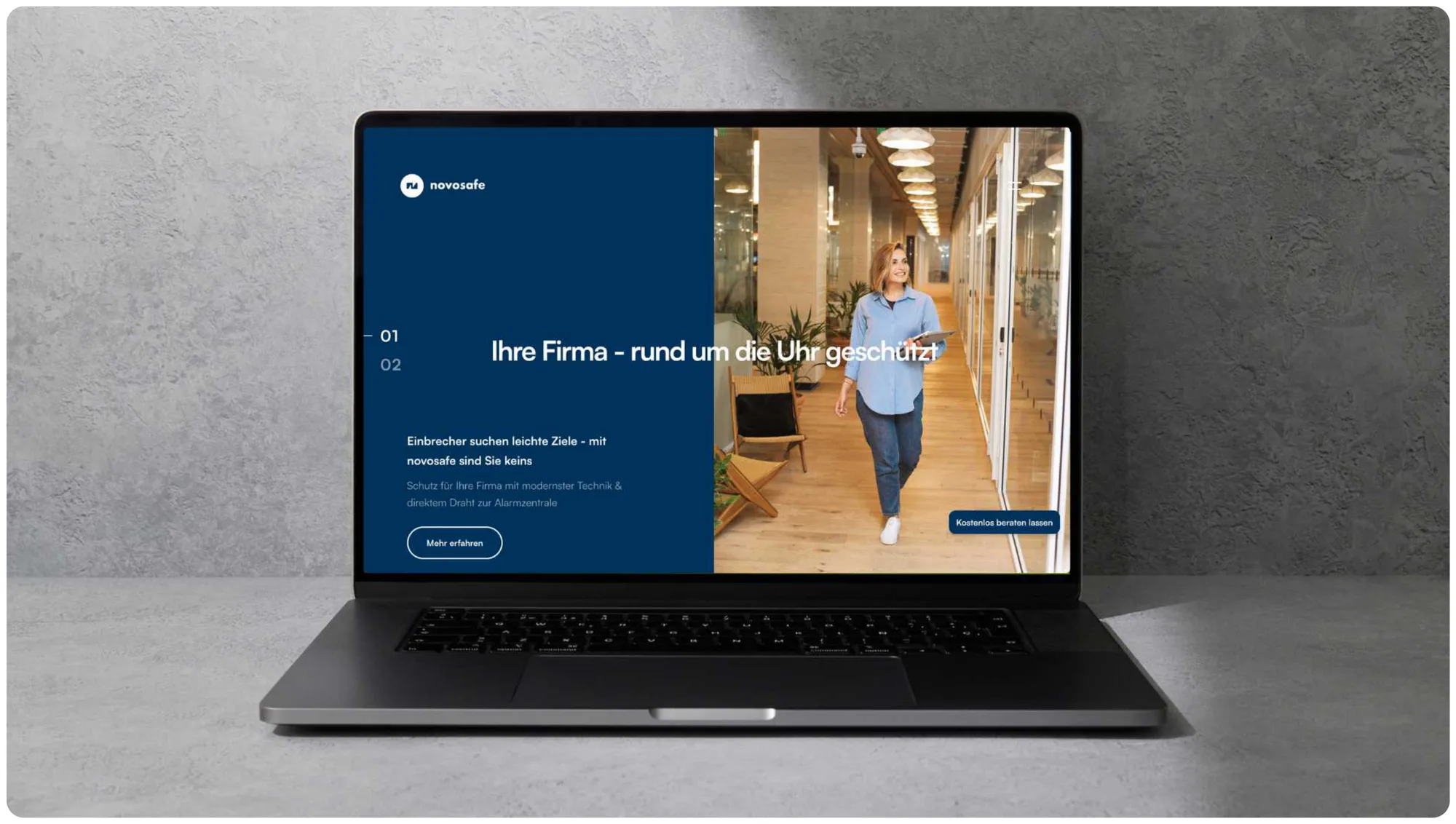
I also designed novosafe's first website in Framer, built around two entry points: one for homes, one for businesses. That business side reflected an earlier, different B2B concept than the one the app has since pivoted to.
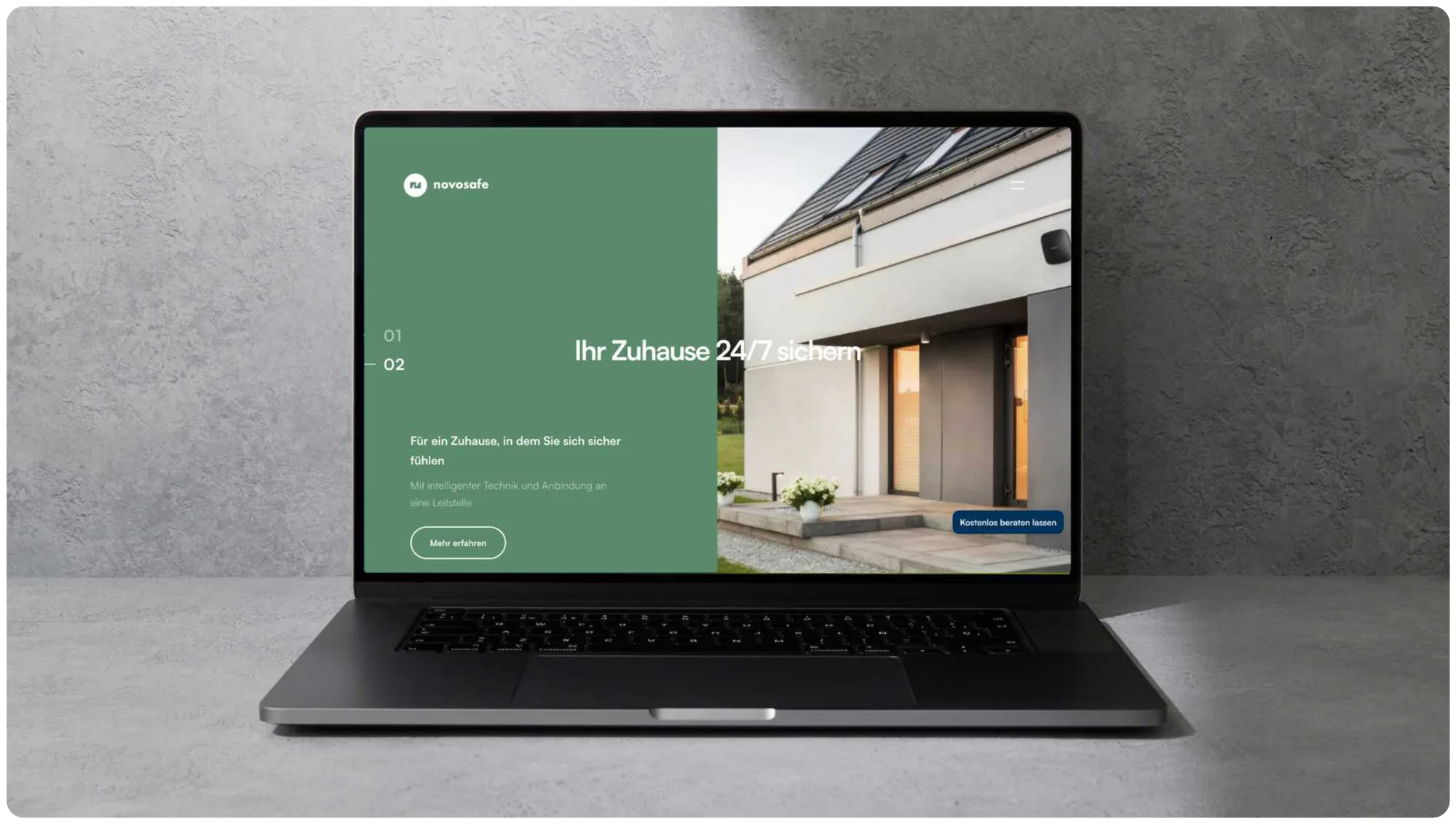
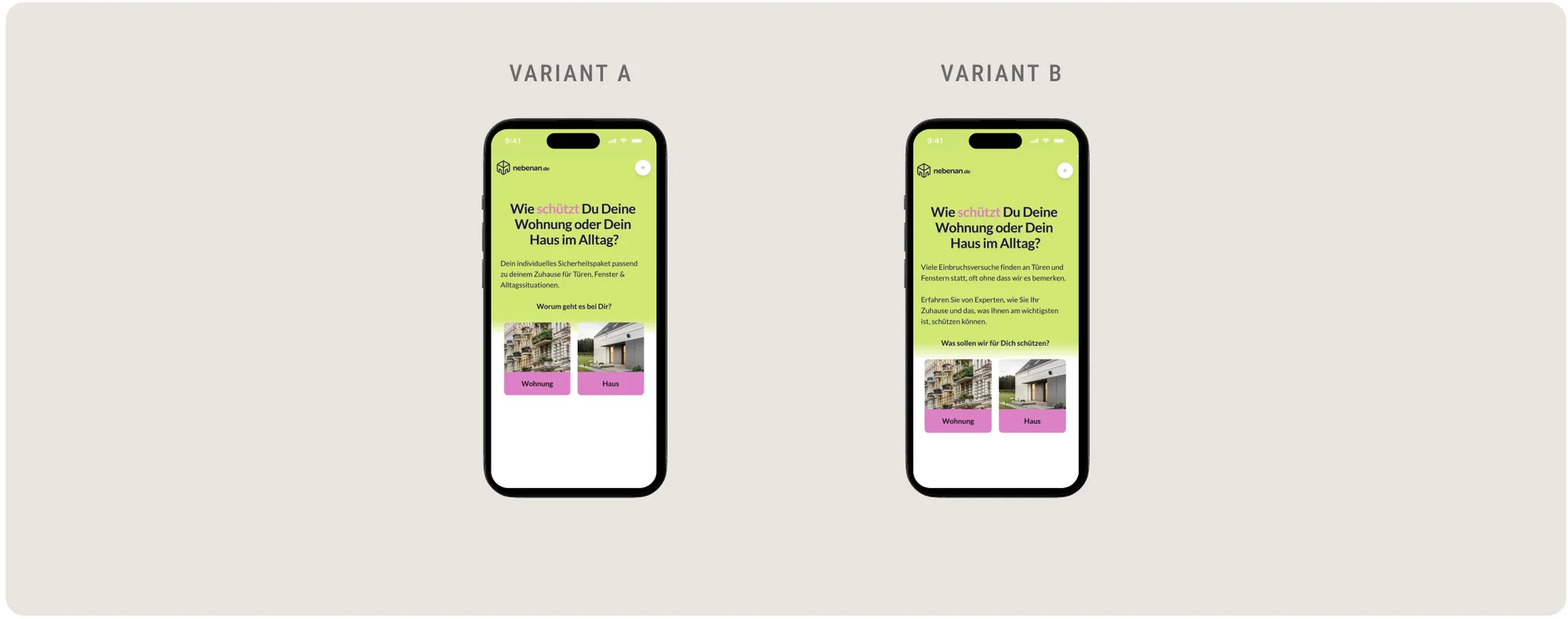
As a parallel lead-generation initiative for that website, I ran two channel-specific campaigns, one for a community platform (nebenan.de) and one for a national newspaper (FAZ), each testing a channel-matched landing variant against a generic one. nebenan.de's own creative guidelines are explicit about this: address people directly in the informal 'Du', and speak through the brand name rather than 'we', since the ad runs inside their platform, not ours. I rewrote the nebenan.de landing page around both rules: dropped every 'wir', wrote consistently in 'Du', and kept the message focused on what you actually get instead of leading with a pitch. The informal, ad-free variant outperformed the generic one: 6.25% vs. 0% conversion (small sample, directional result).
An in-progress, ongoing collaboration: the redesigned app experience is currently rolling out to novosafe's chain-retail and energy-facility clients.